- Serving businesses worldwide with SEO & AI Search Visibility
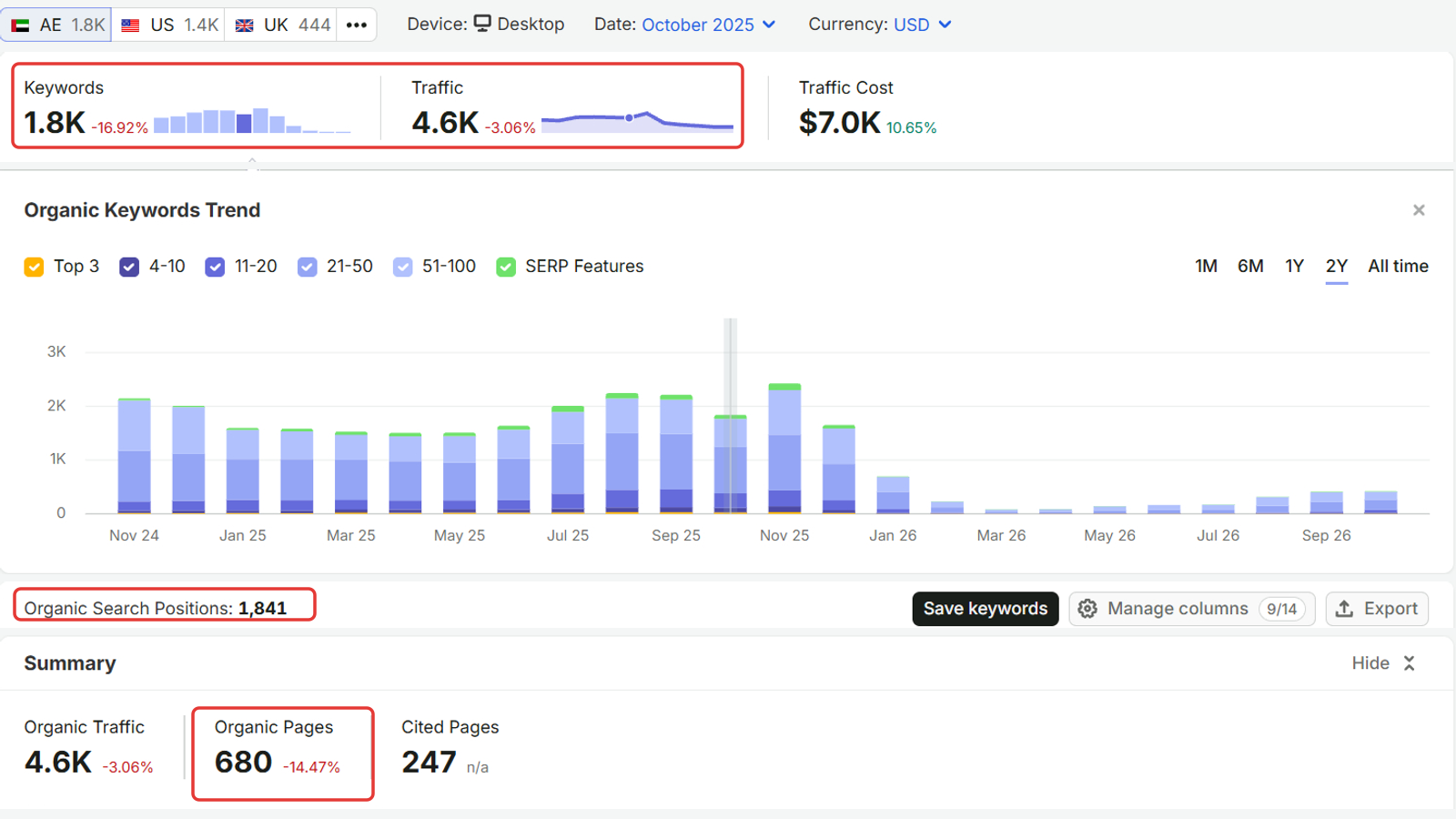
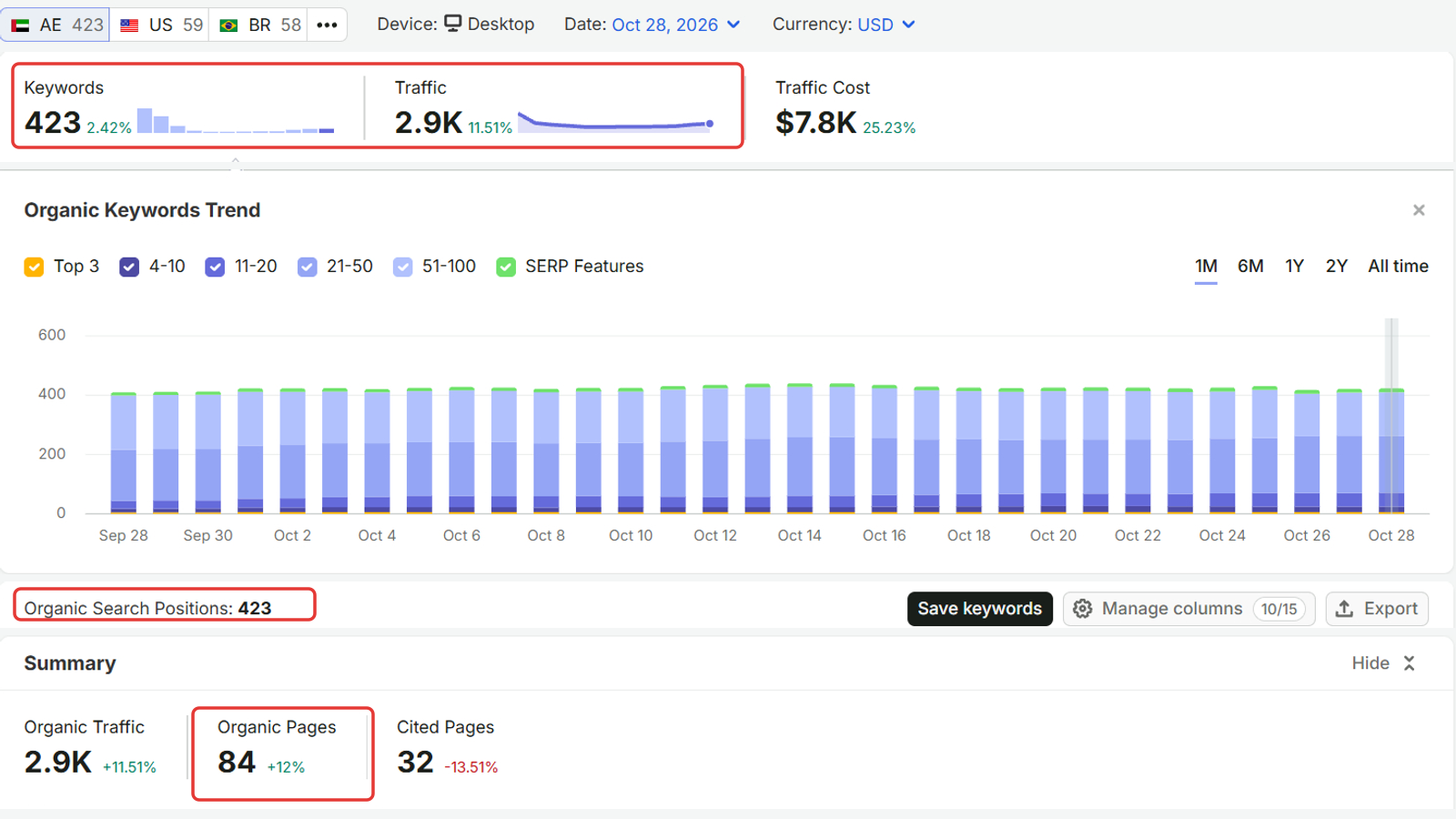
A Dubai real estate website had lost around 37% of its estimated organic traffic between October 2025 and 28 October 2026. Its homepage accounted for an increasing share of the remaining traffic, while several older property and advice pages no longer led to content matching their original purpose.
In this independent real estate SEO review, I compared historical search visibility with selected landing pages, older URLs and referring links. I identified specific pages and connections needing repair, then prioritised them according to the property searches, transaction questions and service enquiries they were intended to support.
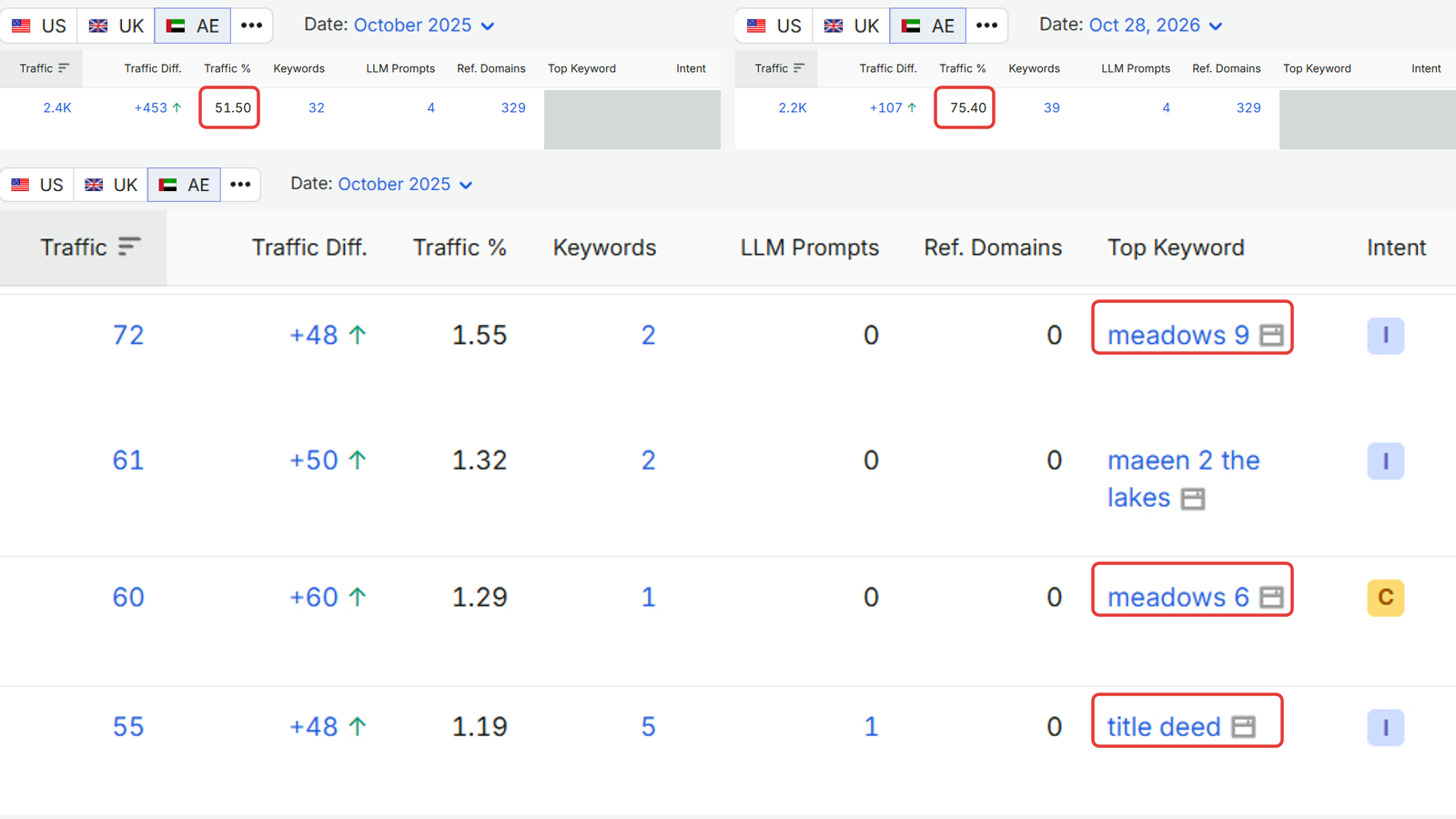
Selected October 2025 landing-page rows. Current destination checks were completed separately.
The overall traffic figure concealed a larger change across the rest of the website. Using the rounded traffic estimates and homepage shares, I calculated an approximate 68% decline outside the homepage. Historical landing-page rows included community searches and transaction questions, giving me specific destinations to investigate.
During checks on 29 October 2026, five selected community sales URLs and one title-deed guide redirected to general property or blog indexes. A relevant replacement title-deed article already existed, yet the older address did not lead to it. Someone following that route would have to search again for the answer. These checks exposed gaps worth repairing, although they could not establish when each problem first appeared or how much of the historical decline it explained.
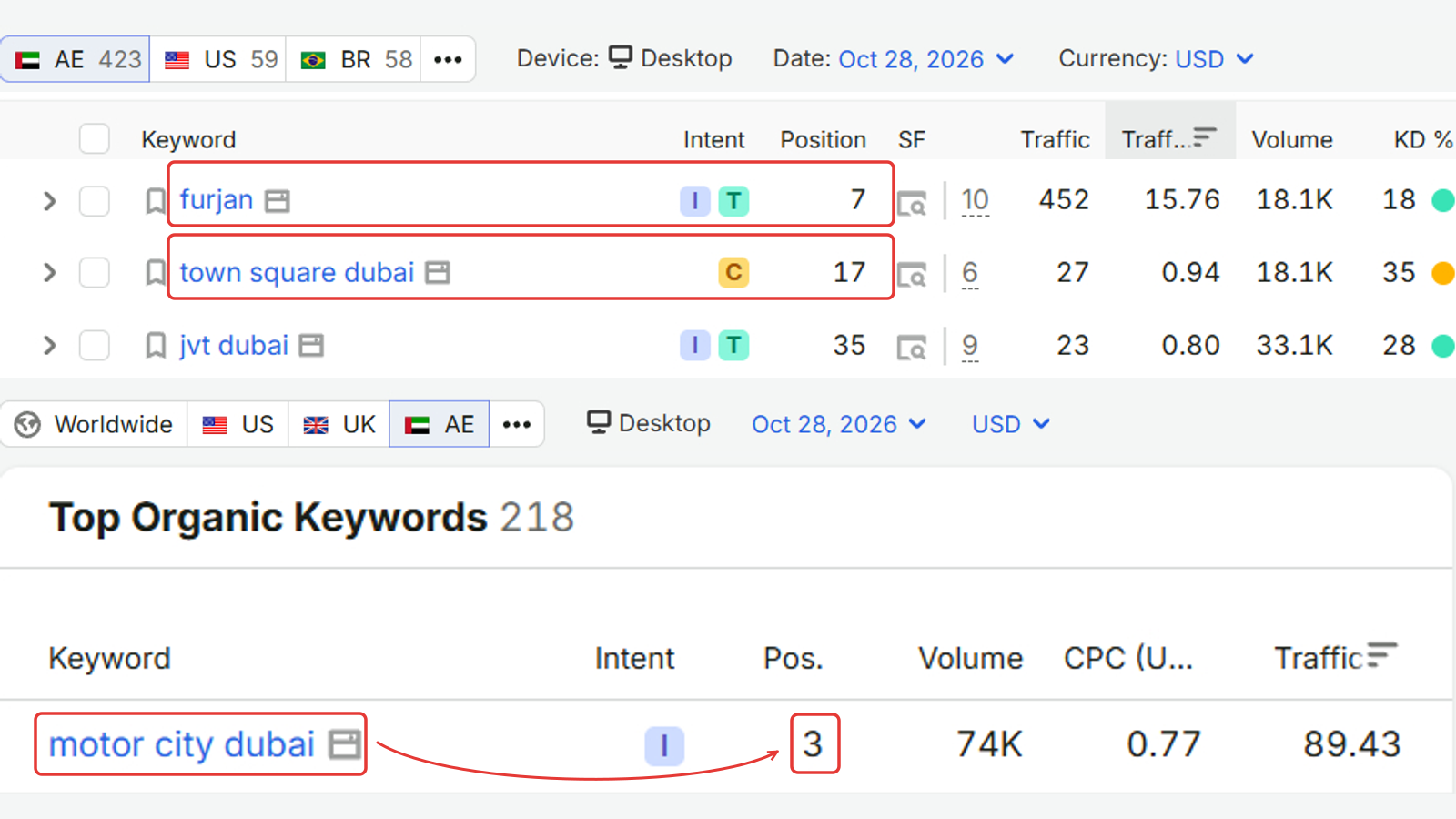
I prioritised community sales pages, transaction guidance and relevant service destinations because their purpose was closely connected to the agency’s business. Existing community content with useful information, listings and an enquiry route provided something to preserve. Each missing collection needed a separate decision based on the agency’s coverage, available stock and ability to provide original information. Recovering every historical lifestyle article was a lower priority unless it helped visitors understand an area or make a relevant property decision.
A search for villas in a particular community needs a destination that retains that location and buying purpose. For the priority collections, the proposed work was to restore a useful page or create a genuinely equivalent replacement, supported by accurate listings and specific buying information.
The remaining community visibility also gave me a reason to protect working area pages and improve their onward links. Visitors should be able to continue into relevant properties without returning to the full catalogue. Where stock is temporarily unavailable, a retained page should explain availability honestly and offer appropriate alternatives.
The title-deed guide had a clear replacement candidate. After confirming that it answered the same question, the older address should redirect directly to that article. The broken management-service address also had a relevant live service page to assess.
For each approved replacement, the work should align the permanent redirect, internal links and sitemap entry. Relevant mappings already working correctly should remain. This follows Google’s guidance to map old URLs to appropriate destinations and avoid irrelevant redirects.
One rental listing combined a rental heading and annual price with sale wording in its description. The authorised offer needed checking before correcting the source record and the page content generated from it.
Two similar listings also required an identity check. Matching details suggested a possible duplicate, but merging them would require confirmation that they represented the same unit. If confirmed, the agency could retain one primary page and update the retired address, internal links and sitemap consistently.
Five community sales pages and one transaction guide. A management-service link ended at a missing page. The heading and annual price disagreed with the description.
The completed analysis turned a broad visibility decline into decisions about particular destinations: which collections deserved restoration, which older addresses needed relevant replacements and which listing details required verification. These counts describe the reviewed sample rather than the total number of problems across the website.
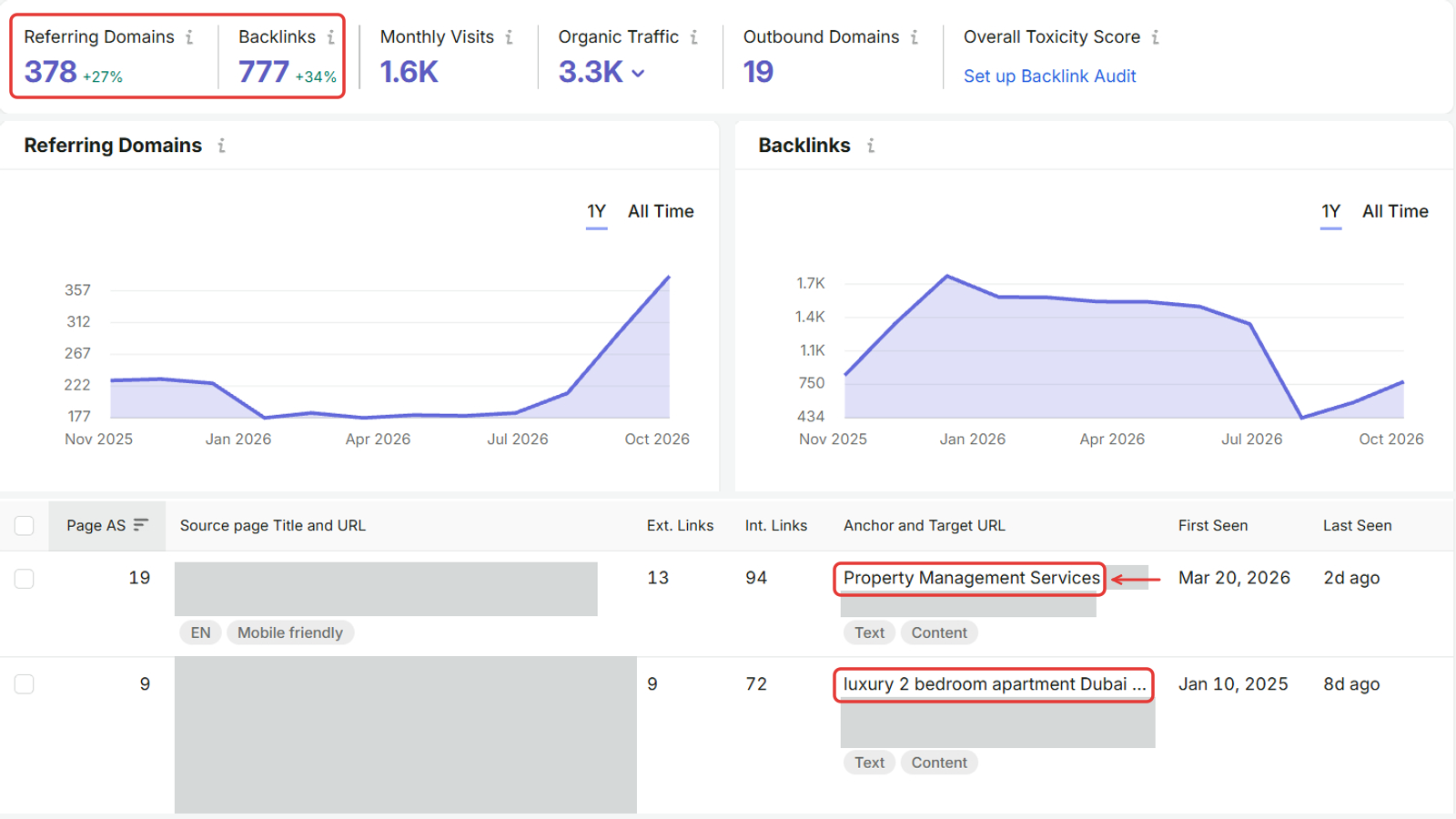
Referring links helped identify another route needing attention. The accompanying report shows selected referrals; the missing page and broad property redirect were established through separate destination checks. The outcome was a prioritised repair plan. Traffic recovery and additional enquiries remained unmeasured because the proposed work had not been implemented.
For the agency’s owners and marketing team, these priorities provide a basis for deciding where development and content effort should go. Relevant property searches, transaction questions and service referrals each need a suitable destination before their commercial contribution can be evaluated.
A proposed 45-day implementation and review window would organise the initial repairs and checks. After release, affected pages should be monitored alongside successfully received enquiries and their property or service context. The business would then have evidence for deciding what to retain, improve or investigate next.