From 960 to 2,040
organic search clicks.

The agency in this illustrative case relied mainly on property listings to explain its business. Sellers and landlords needed clearer information about the selling and leasing service, local expertise and what would happen after an enquiry.

The example project focused on owner-service pages, links from community content and the enquiry journey. Reporting also separated general submissions from contactable property owners whose needs matched the agency’s services.

Business Goal
Turn relevant searches into qualified owner enquiries.
BEFORE
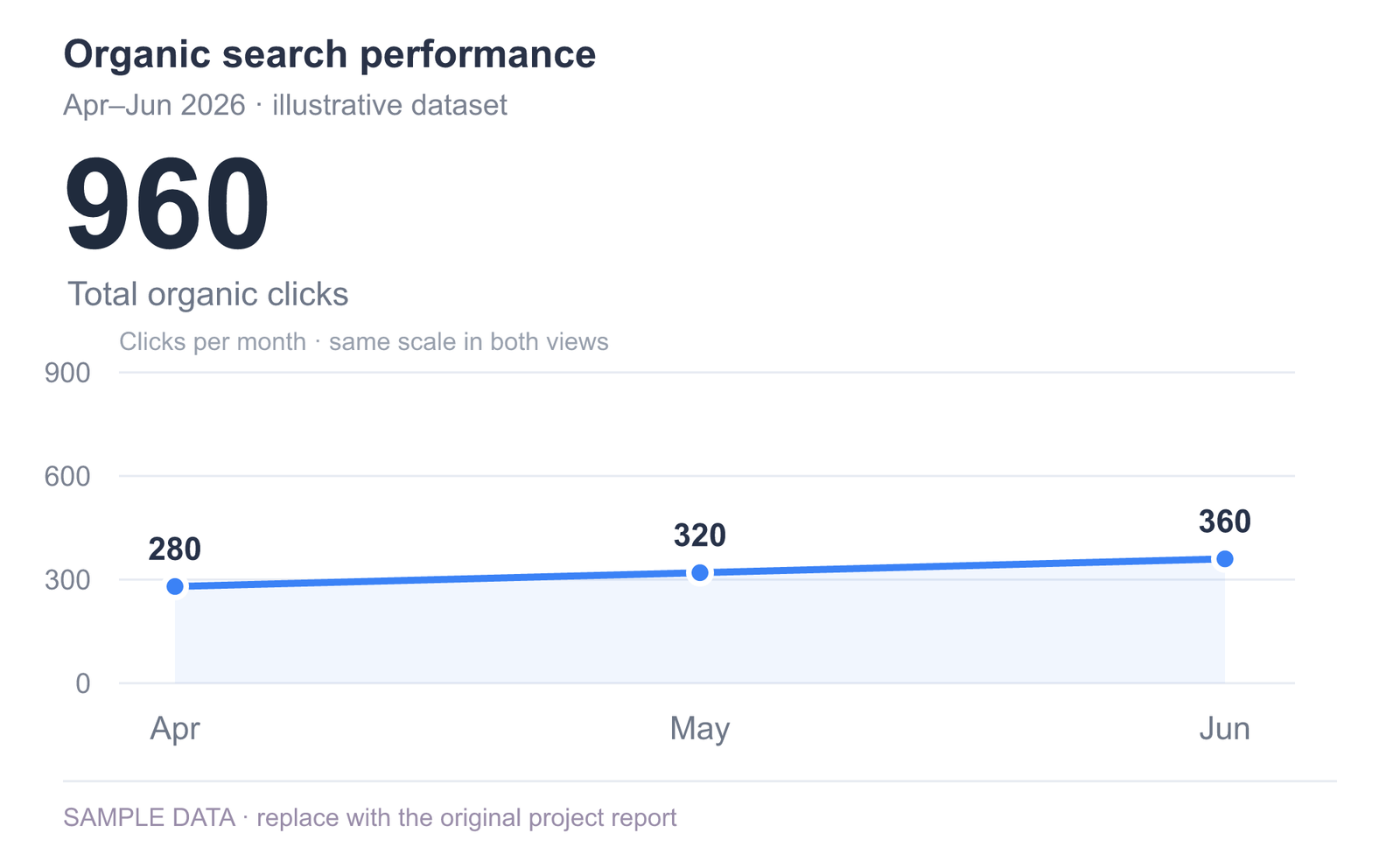
Baseline: 960 clicks across the first three-month window.
AFTER
Comparison: 2,040 clicks across the following three-month window.
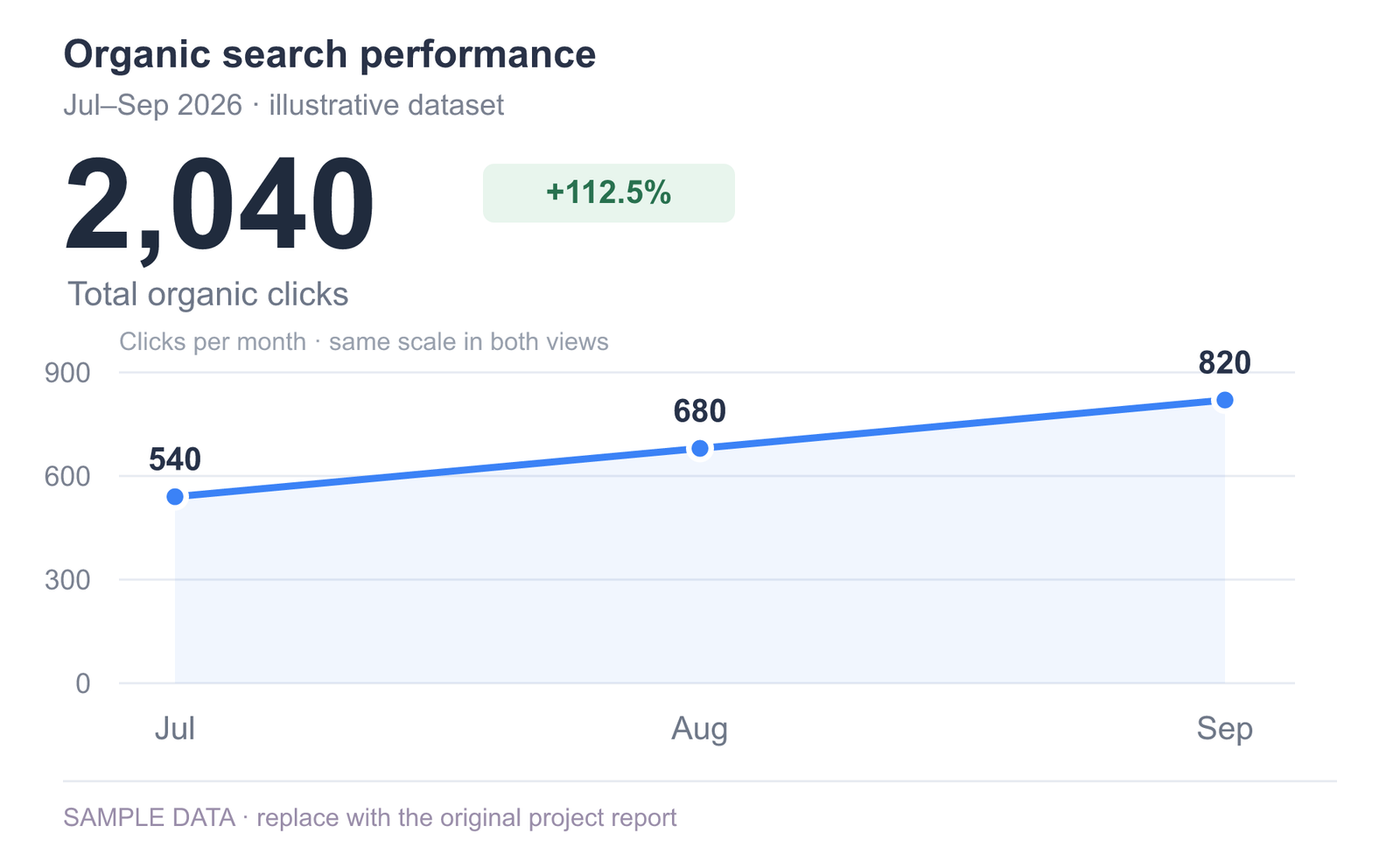
Organic search clicks (sample)
2040
960 → 2,040 · sample dataset
Organic enquiries (sample)
46
20 → 46 · sample dataset
Qualified owner enquiries (sample)
29
12 → 29 · sample dataset
Qualified share (sample)
63.0%
60.0% → 63.0% · sample dataset
What I found

The missing connections behind the enquiry journey.

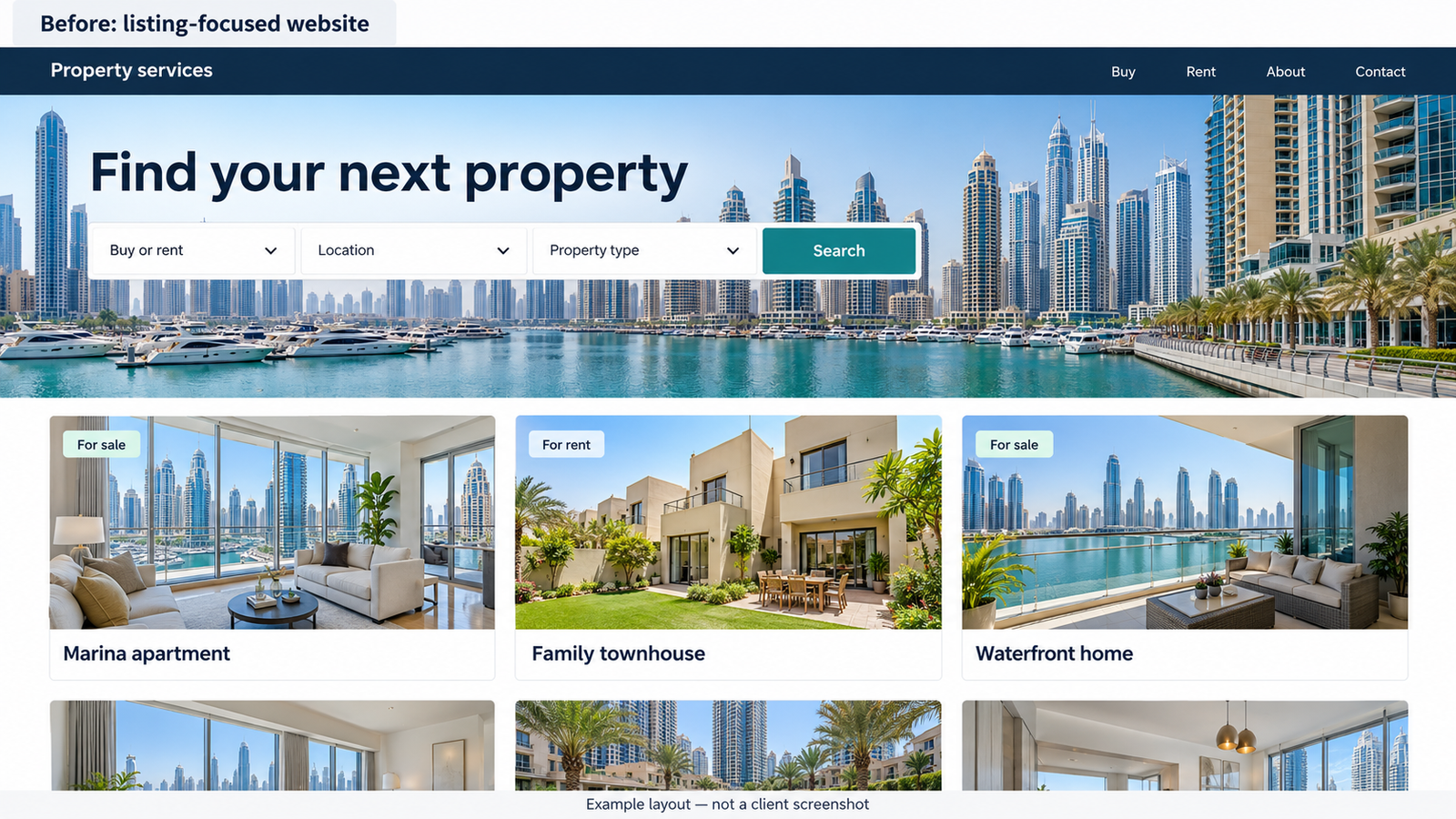
Starting-page illustration: property inventory is prominent. This supports the layout observation, rather than proving a cause of traffic changes.

The starting-page illustration shows property inventory taking the main role. The example review identified a need for dedicated selling and leasing information: who the agency could help, its area coverage and what an owner should expect after enquiring. The image supports the page-layout observation; search intent and visibility would need to be checked against query and landing-page data.

The review also considered the links from community content to owner services and whether enquiry records could distinguish relevant owners from other submissions. Those checks established the work’s priorities. A larger enquiry total alone would not show whether the agency was attracting suitable prospects.

The decisions

Clarify the service first. Then connect the journey.

Service information came first because additional search traffic would have limited value if an owner could not judge the agency or find the next step. Page connections followed, helping useful community information lead towards the relevant service. Enquiry measurement completed the plan so the agency could assess relevance alongside volume.

What changed

Turning the priorities into page changes.

Rebuilding the owner-service information.

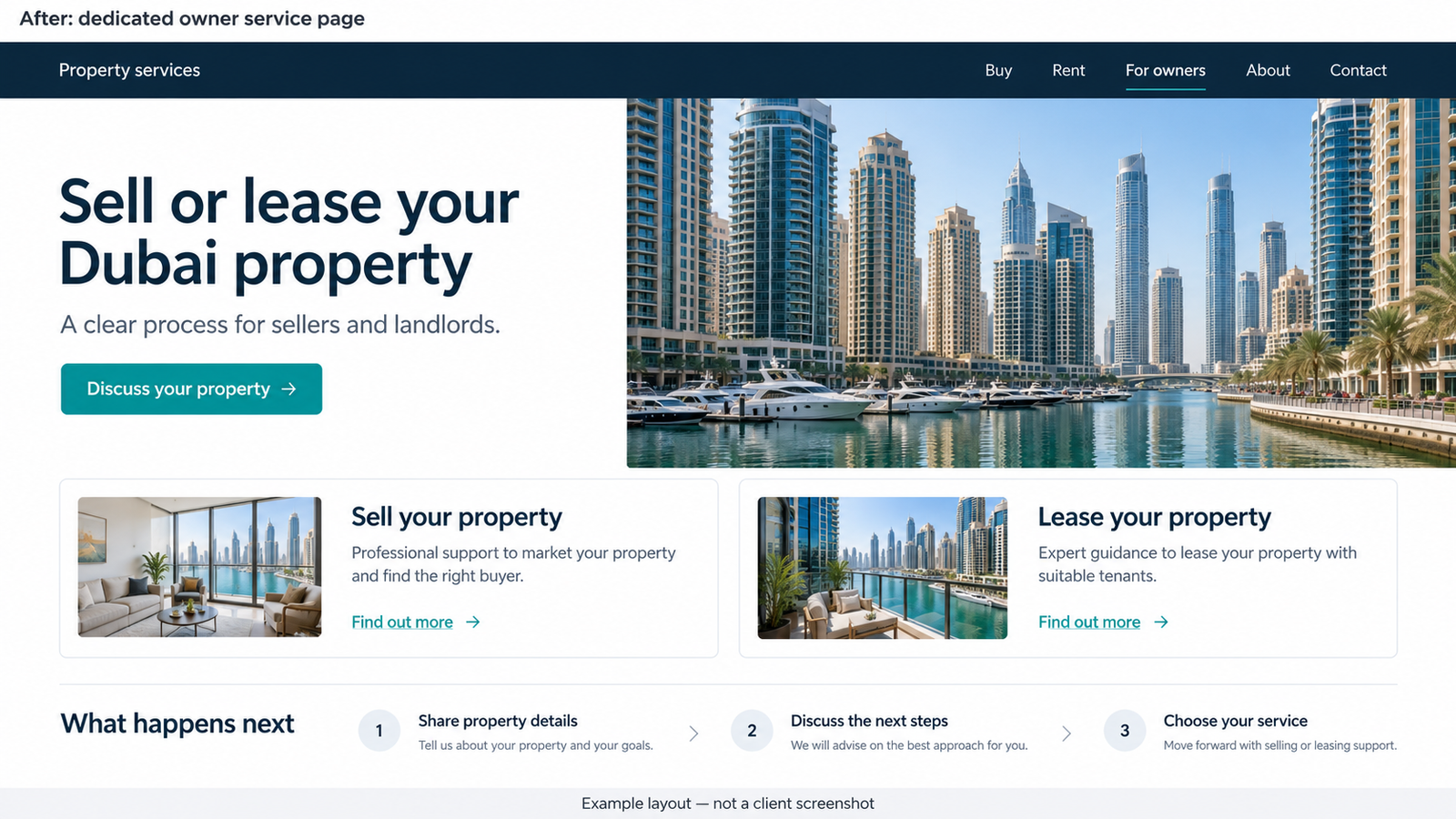
In this example, selling and leasing pages were organised around the owner’s decision. Each page explained its intended audience, the agency’s role, relevant area expertise and the steps after contact. The illustration places that information beside a clear enquiry action, showing the main content and layout change.

Before
Illustrative listing-focused property website before an owner service page; not a client screenshot.
Starting-page illustration: property inventory is prominent. This supports the layout observation, rather than proving a cause of traffic changes.
Owner service pages
Illustrative owner service page for selling or leasing a Dubai property; not a client screenshot.
Implementation illustration: service information, an enquiry action and next-step guidance. Search and enquiry reports measure the outcome separately.

Connecting pages with the enquiry step.

Community pages linked to the appropriate selling or leasing service. Calls to action, form questions and confirmation messages were aligned with that route, so an owner could understand what to submit and what would happen next. The completed journey would be checked on mobile and desktop before release.

Recording which enquiries were useful.

Source and landing-page information were connected with the agency’s review of each enquiry. Duplicate handling and a shared qualification rule distinguished a form submission from a contactable owner with a relevant property and service need. This made the reporting useful for follow-up decisions.

Results & what they meant

More search clicks. More relevant enquiries.

+112.5% Organic search click growth
+130.0% Organic enquiry growth
+141.7% Qualified owner enquiry growth
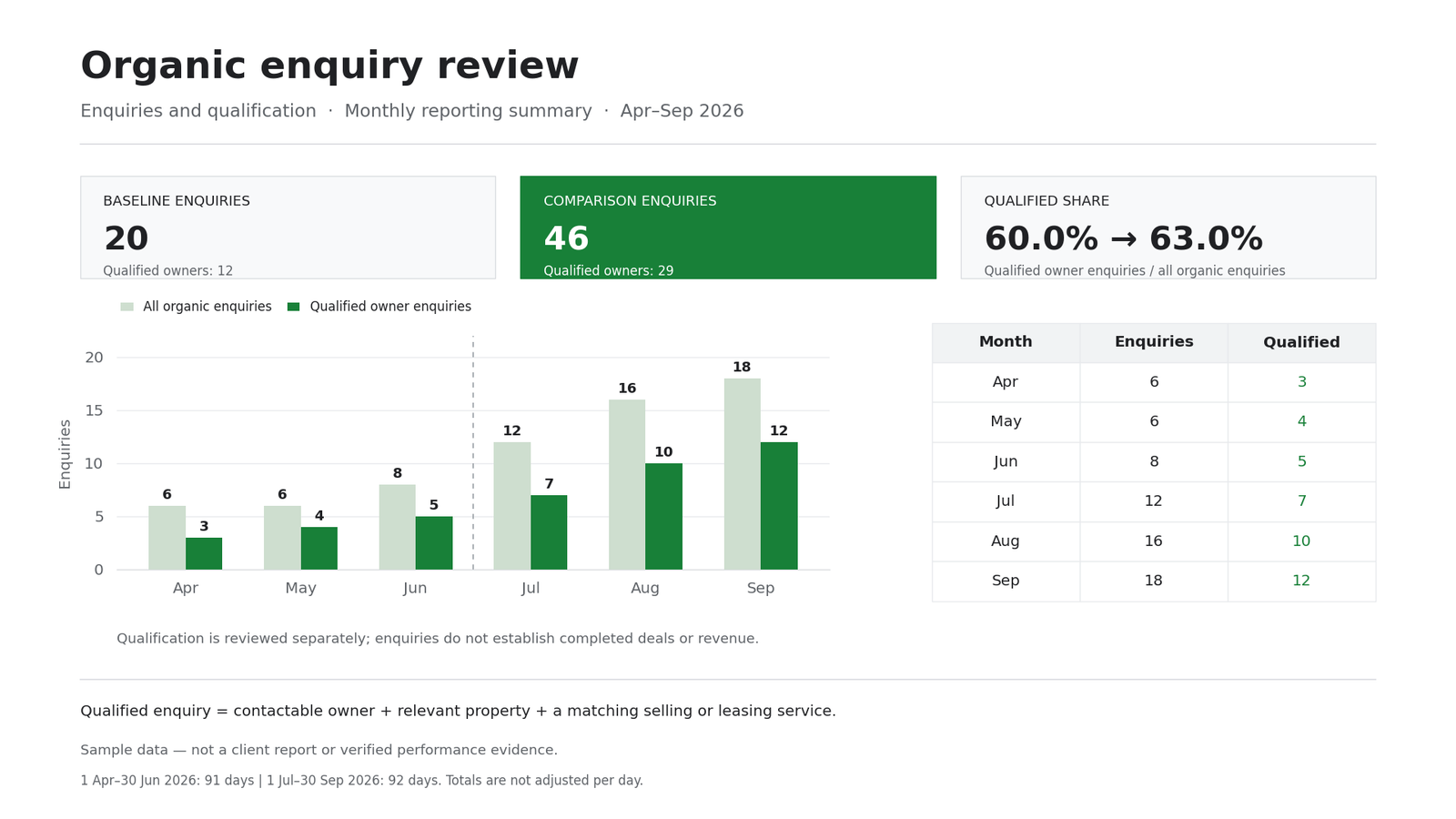
Organic enquiry report showing monthly enquiry totals and qualified owner enquiries from April to September 2026.

Clicks rose by 112.5% across the two reporting periods. Organic enquiries increased from 20 to 46, including qualified owner enquiries from 12 to 29. Qualified share moved from 60.0% to 63.0%, an increase of 3 percentage points.

These comparisons show the measured changes across the two reporting windows. Source records and qualification rules provide the context for interpreting them.

Business context

What the Results Mean

For example, a rise in qualified owner enquiries would give the agency more relevant conversations to progress. Signed mandates, completed transactions and revenue would need to be measured separately.

This project focused on giving property owners a more useful route through the agency’s website.

The case study should be assessed against its starting point, the work completed and the evidence available. Relevant context includes [seasonality, campaigns, market changes or tracking limitations].

01
Starting point
A website mainly built around property listings
02
Work completed
Owner services, community content and enquiry paths
03
Available evidence
[verified outcome explained in plain language]
04
Business context
[seasonality, campaigns, market changes or tracking limitations]
Interpretation & limitations

A before-and-after comparison shows what changed during the project. It does not, by itself, establish how much of that change came from each individual SEO action.

Case study measurement context
More case studies

Browse the existing case study library.

Local Search

Explore the existing local search case study framework.

Technical SEO

Explore the existing technical SEO case study framework.